
Deliverable 2.1 Now Available on DTU Data: Tools for Analyzing Lifetime Engineering Assessment
Deliverable 2.1, Tools for Analyzing Lifetime Engineering Assessment, is now available on DTU Data: ESOMOOR project.
Floating offshore wind energy presents a major opportunity in the global transition toward sustainable energy. However, the cost-effectiveness and environmental sustainability of large-scale floating offshore wind farms (FOWFs) remain significant challenges. The ESOMOOR project (enhancing shared mooring system design for floating offshore wind farms), co-funded by the European Union under the CET Partnership, addresses these challenges by developing and validating shared mooring system designs and integrating advanced materials such as synthetic fiber ropes. By focusing on mooring systems and associated cable networks, the project aims to contribute to future levelized cost of energy (LCoE) reduction for floating wind applications by enabling improved design assessment, while ensuring structural integrity and minimizing environmental impact throughout the lifecycle. The project is structured around a series of connected work packages that address the key technological, economic, and environmental challenges in deploying shared mooring systems for FOWFs. It emphasizes experimental and simulation-based validation of novel mooring configurations and fiber rope applications, with the goal of accelerating the commercialization of floating offshore wind technologies.
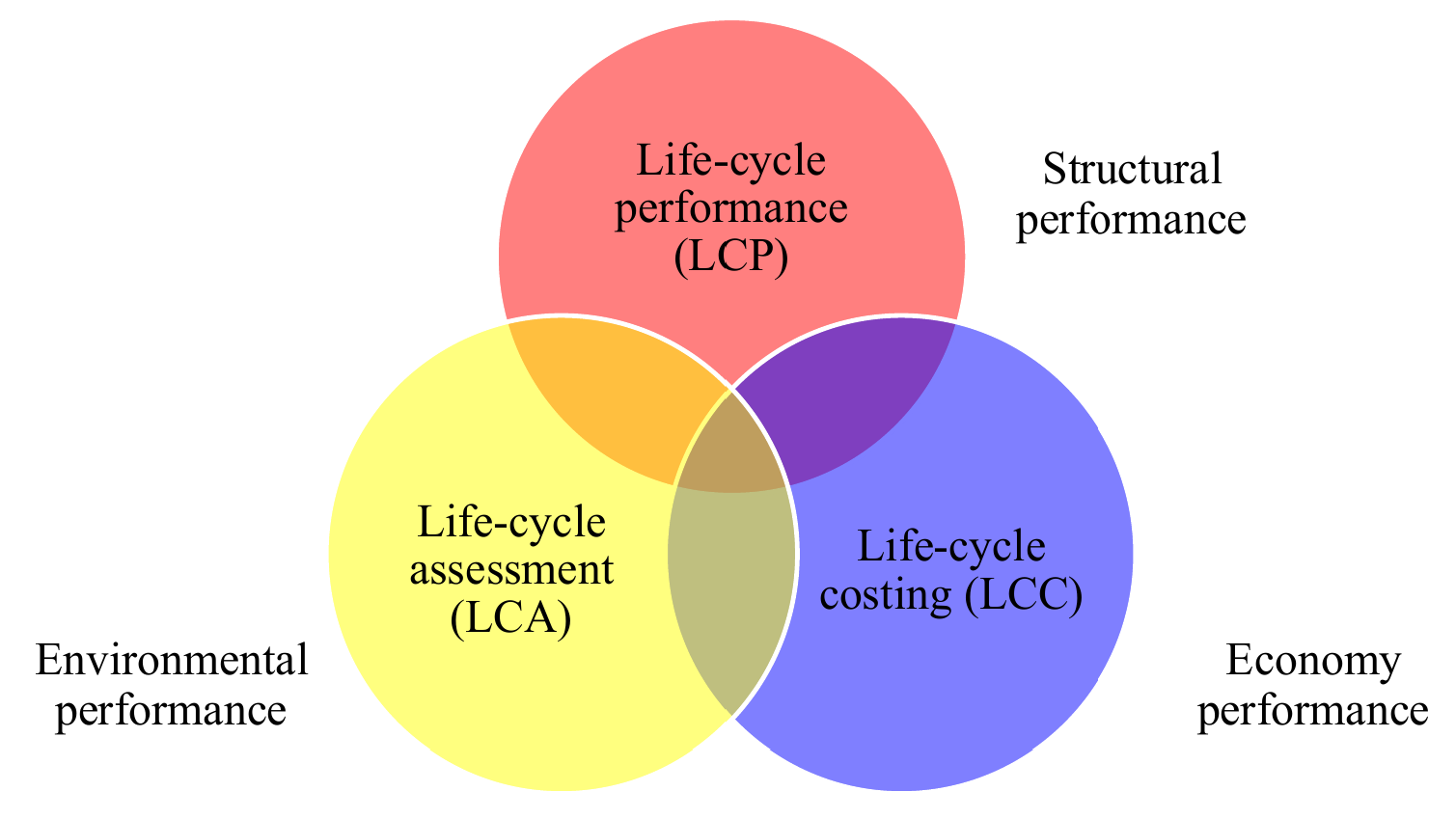
Work package 2 (WP2), led by Chalmers University of Technology, focuses on the integrated evaluation framework of shared mooring systems from life-cycle perspectives. It integrates life-cycle assessment (LCA), life-cycle costing (LCC), and life-cycle performance (LCP) to provide a comprehensive understanding of the economic and environmental impacts of mooring systems over their entire lifespan. WP2 also aims to develop modular and extensible tools for LCC and LCA simulations, designed to accommodate a broad range of floating platform configurations, mooring architectures, and site conditions. These tools allow design alternatives to be evaluated based on cost and environmental metrics and enable rapid iteration and design optimization in collaboration with industrial partners.
This deliverable report (D2.1) provides the foundational documentation of the LCC and LCA methodologies developed within WP2. It presents the structure and implementation of the LCC simulation library, which has been developed using MATLAB Simulink, and details the integration of external tools. The preliminary setup for LCA using OpenLCA is also described. In addition, a preliminary framework for assessing life-cycle performance (LCP) has been outlined to support structural integrity evaluations. The deliverable report focuses on the cradle-to-gate phases of the FOWF lifecycle, particularly comparing spar and semi-submersible platforms, while the cradle-to-grave phase is considered as the future plan for D2.2. It serves as a preparatory document for the subsequent case studies and integrated sustainability assessments planned in later stages of the project.